Where we are
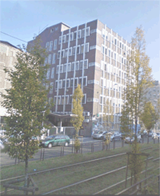
Polytechnic of Milan {mosmap} Department of Architecture and Urban Studies Via Bonardi, 3 III floor 20133 – Milan . Italy How to reach the laboratory LPS Railway station Airport Public Transportation service Central station Malpensa airport ATM Milano FN Cadorna station Linate airport Underground city map FS Lambrate station Orio al Serio airport FS Garibaldi […]
Le persone del laboratorio

Ranci Costanzo Cerea Stefania Costa Giuliana Cucca Roberta d’Ovidio Marianna Di Maria Laura Maestripieri Lara Sabatinelli Stefania Torri Rossana
People
Ranci Costanzo Cerea Stefania Costa Giuliana Cucca Roberta d’Ovidio Marianna Di Maria Laura Maestripieri Lara Sabatinelli Stefania Torri Rossana
Social determinants of health inequality in Lombardy
36 months Working group: Roberta Cucca Aim of the project is to analyze some social and institutional mechanisms promoting health inequalities in Lombardy, at urban level. In particular the project focuses on two distinct and integrated dimensions: 1) the position that different social groups hold within the social stratification, which affects their access to resources and services; 2) the geographic concentration of specific determinants, which can disadvantage the social groups more exposed to pathogens and pollutants. The research is carried out through different […]
Promotion of sustainable lifestyle to vulnerable population in the Lombardy region. Demands analysis and interventions tools proposal
January 2011 – January 2012 Gruppo di lavoro: Marianna d’Ovidio The research is focused at proposing policy recommendations aimed to the promotion of sustainable lifestyles, looking in particular at vulnerable populations. The research is structured as follow: Lifestyle analysis through quantitative data; a cartographic analysis of Lombardy population and environmental risks; examination of local policies and best […]
The political economy of self-employed middle class
Since March 2007 Working group: Costanzo Ranci (direttore scientifico), Stefania Cerea, Giuliana Costa, Roberta Cucca, Laura Di Maria, Ivana Fellini, Pietro Lembi, Lara Maestripieri, Valentina Moiso, Emmanuele Pavolini The project belong to a wider research program focused on the italian middle class crisis. The program is funded by the Italian Council for Social Sciences, and […]
Competitiveness and social cohesion in European cities
Since 2009 Working group: Costanzo Ranci (coordinamento scientifico), Roberta Cucca, Nathalie Kakpo, Lara Maestripieri, Fabio Manfredini, Agostino Petrillo, Rossana Torri. The project forms part of the research that the Laboratory has been developing a number of years through the support of the Chamber of Commerce of Milan, with the aim to investigate the relationship between the […]
Institutional Change in Long Term Care in Europe
November 2010 – February 2012 Working group: Costanzo Ranci (Politecnico di Milano) e Emmanuele Pavolini (Università Politecnica delle Marche): coordinamento scientifico August Oesterle (University of Economics and Business, Vienna), Viola Burau (University of Aarhus) e Hanne Marlene Dahl (University of Roskilde), Claude Martin (University of Rennes and CNRSFrance) Blanche Le Bihan (Ecole des Hautes Etudes […]
WILCO
December 2010 – December 2013 Working group: Costanzo Ranci, Giuliana Costa, Stefania Sabatinelli The general objective of the project is to comparatively analyse how local welfare systems can favour social cohesion, with particular reference to three target groups: precarious young adults; single mothers; migrants. The research forsees the analysis of three policy areas – employment, […]
FLOWS
Jan 2011 – June 2014 Working group: Costanzo Ranci, Roberta Cucca, Lara Maestripieri The project aims to investigate how the local welfare systems affect women’s participation in the labor market and, conversely, how women’s employment can affect the course of life (both men and women), on the structures of inequality, social cohesion and ultimately on […]